Publicaties Hersencentrum en achtergrondinformatie
- Een pilotstudie naar de convergente en discriminante validiteit van de Nederlandse versie van de parametrische Go/No-Go-taak
anker: Nederlandse parametrische Go/No-Go-taak
A Pilot Study of the Convergent and Discriminant Validity of the Dutch Version of the Parametric Go/No-Go Task
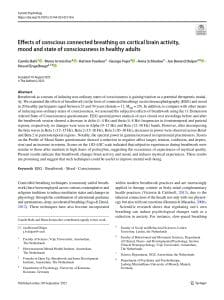
- Effecten van bewuste verbonden ademhaling op corticale hersenactiviteit, stemming en bewustzijnsstaat bij gezonde volwassenen
Effects of conscious connected breathing on cortical brain activity, mood and state of consciousness in healthy adults
- De effecten van een -lichte fysieke activiteit- interventie op fysieke fitheid en cognitie bij gezonde ouderen met een laag niveau van lichamelijke activiteit
- Het gebruik van de Eriksen Flanker Task als trainingsinstrument voor cognitieve controle bij inhibitiestoornissen
De effecten van autonome sensorische meridiaanrespons (ASMR) op stemming, aandacht, hartslag, huidgeleiding en EEG bij gezonde jongvolwassenen
- Relatie tussen DMN en het stoppen met roken na een realtime-fMRI-neurofeedback ondersteunde exploratieve therapie.
- Het Effect van Hormoonbehandeling op het Emotioneel Welzijn en het Cognitief Functioneren van Transmannen
-
Literatuurstudie naar de effecten van EEG neurofeedback trainingen, specifiek bij ADHD en/of slaapproblemen
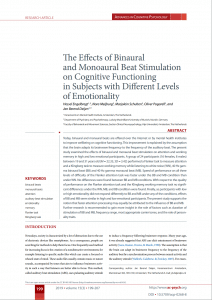
- Effect van Auditieve stimulatie, door middel van binaural beats en monaural beats, op aandacht en EEG
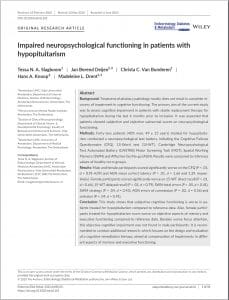
- Psychologisch welbevinden en sensaties van ‘niet lekker voelen’ bij patiënten met hypopituïtarisme na hormoonbehandeling
- gevoeligheid voor sociale context in de interpersoonlijke interactie bij mensen in het schizofrenie spectrum
- De relatie tussen Insulin-Like Growth Factor 1, Apolipoprotein E ε4, leefstijl, het verouderende lichaam en de hersenen
De invloed van prefrontale hersenfuncties, persoonlijkheidsfactoren en coping op moedeloosheid en doodswens
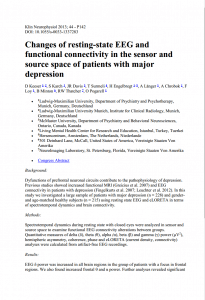
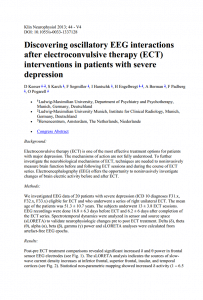
EEG na electroconvulsietherapie (ECT) bij ernstige depressie
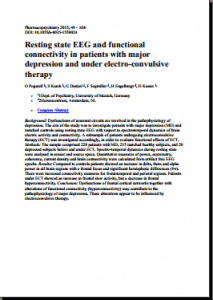
Hersenactiviteit tijdens een paniekaanval
Neurofeedback van frontaalkwabfuncties bij gezonde studenten
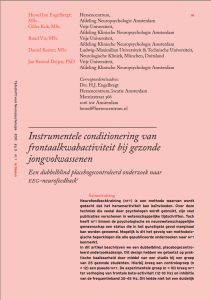
EEG neurofeedback, lange termijn effecten
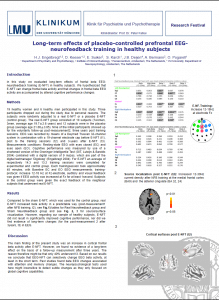
korte en lange termijneffecten van prefrontale EEG beta neurofeedback bij gezonde studenten
effecten van neurofeedback bij ouderen in een verzorgingstehuis
Persoonlijkheid en hersenconnectiviteit
Voorspellen van de bijwerkingen van cholinesteraseremmers bij Alzheimer dementie (AD) en Vasculaire dementie (VaD)
Partners voor wetenschappelijk onderzoek
- EEG-Resource Institute Nijmegen
- LMU (Ludwig Maximilians Universität) München (faculteit voor psychiatrie en psychotherapie)
- VU (Vrije Universiteit) Amsterdam (afdeling klinische neuropsychologie)
- GGZ
Hersencentrum Mental Health Institute op wetenschappelijke zoekmachines:
Pubmed
Google Scholar